Nasal swabs have been around for nearly a century, with relatively minor, incremental changes over those many decades.
In fact, they haven’t changed much at all — from their initial role in influenza specimen collection in the 1930s to the 2020 global pandemic.
Saline lavage, a nasal cavity flush with sterile saline which is then recollected as a specimen, was the gold-standard sampling method for patients with URI. In fact, prior to the pandemic, there were many academic studies that showed nasal lavage produced a higher sensitivity sample compared to nasal swabs in URI patients.
However, the multiple nasal wash protocols utilized around the world before the pandemic were not standardized, used a variety of different syringes and collection basins, and were inconsistent and messy, putting healthcare workers at risk for infection.
So, we turned to nasal swabs because they were accessible, cost-effective and ready to be rapidly deployed during COVID-19 and produced an acceptable sample for URI pathogen testing.
Lessons from the COVID-19 pandemic then paved the way for a better solution that surpassed the nasal swab on virtually all levels, including comfort, sensitivity, safety and shelf-life.
A Quick History of the Nasal Swab
Let’s first overview the swab’s past: How it came to be, when it was first used medically and why it historically came in second to saline washes.
- 1919: Leo Gerstenzang watched his wife, Zuita, cleaning a child’s nose with a wad of cotton wrapped around a toothpick. A lightbulb went off, and in 1923 these two became the “mother and father” of the nasal swab we know today. However, its medical potential was largely untapped.
- 1938: Complementing the new flu vaccine, cotton swabs were used as a sample collection tool, especially for U.S. forces during World War II who couldn’t rely on traditional saline washes — by far the most common sampling practice for patients back home at the time.
- 1938-2019: Nasal wash remained the URI testing standard even as nasal swabs for sampling became sleeker, longer and more distinct from the typical “Q-Tip.” They were also cheap to mass-produce and less messy than saline washes, making them the default alternative.
- 2020: When COVID-19 took the world by storm, nasal swabs did too. They were the best sampling option out of the few available, including nasal wash, for the reasons cited earlier.
The Nasal Swab Default During COVID-19
Although nasal swabs have been commercially available for many decades, saline nasal lavage was the preferred specimen collection technique prior to the pandemic for URI testing. However, the nasal wash sample collection protocols available at this time were messy, increased exposure risk for healthcare personnel and presented a significant challenge in deployment and scalability for global pandemic response.
Thus, the pandemic default URI sample collection method became nasal swabs — not because they were a fully vetted specimen collection system, but because they were easily mass produced and quick to deploy.
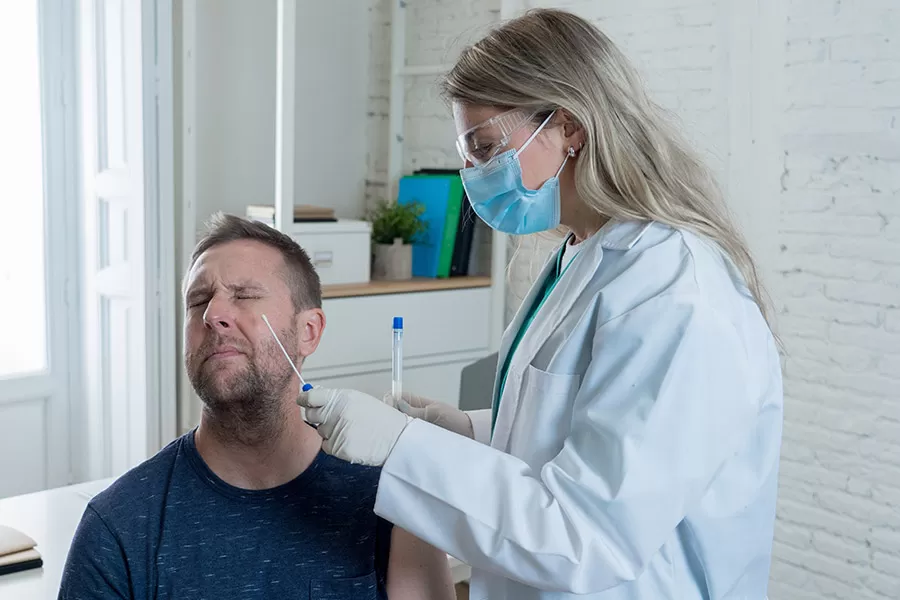
Nasopharyngeal swabs (NP swabs) were essentially the only specimen collection method utilized during the pandemic. This type of swab reached far into the nasal cavity and was extremely uncomfortable for patients, but it yielded acceptable samples.
Late in the pandemic came the anterior nare swab, which entered the nostril only. While this greatly reduced patient discomfort and testing aversion, it also reduced sample quality and impacted testing sensitivity.
In addition to patient discomfort and marginal sample quality, nasal swabs presented many other downsides, including short shelf life, injury and exposure risk, lower sample sensitivity, no reimbursement pathway for healthcare organizations and public disdain and avoidance.
There’s no denying both types of swabs served their purpose during the COVID-19 pandemic, but the nasal swab’s drawbacks left experts wondering: Could more lives have been saved if we had proactively created a better sampling method?
What’s Next: Swapping the Swab for Evolved Nasal Lavage Solutions
Using the lessons learned from COVID-19, nasal lavage has once again emerged as the sampling gold standard — this time, revamped for the future of virus containment. Here’s how:
Higher-Sensitivity Samples
Nasal swabs coupled with antigen tests can be unreliable, often producing false negative results and missed diagnoses during the critical treatment window — when antiviral therapy is most effective and has been shown to save lives. Evolved nasal lavage devices have far greater sensitivity in PCR testing compared to the swab.
Nasal lavage reaches the entire nasopharyngeal cavity for optimal specimen capture, while the insertion depth constraints of the swab limit its range of sample capture which can be worsened by poor sampling technique.
Greater Public Acceptance
Many patients experienced testing aversion during COVID-19, as ramming a swab up one’s nose is objectively unpleasant. This apprehensiveness often led to one of two things:
- Patients jerking or flinching when the nasal swab was inserted into their nose, leading to inadequate samples, inaccurate results or worse yet, physical injuries.
- Patients simply avoided getting tested altogether, causing preventable URI to spread.
New-and-improved nasal lavage provides a win-win: Comfortable patient experiences that do not sacrifice high-quality specimen capture from deep inside the nasal cavity.
Safer for All Involved
There were multiple risks to patients undergoing nasal swab sampling during the COVID-19 pandemic, from broken swabs being lodged in the nasal cavity to potential CSF leaks. And the safety issues didn’t stop at the patient level.
Nasal swab sampling also induced patient coughing and sneezing, putting healthcare professionals at risk for infection. Additionally, lab professionals had to manually extract nasal swabs from specimen tubes, resulting in processing delays and placing them at risk for infection. Broken-off swabs and other mishaps compromised both their health and specimen integrity.
Fortunately, all of these issues are overcome by a next-generation nasal lavage system.
Longer Shelf Life
Swabs typically have a shelf life of 1 to 2 years, limiting stockpiling capabilities and increasing inventory costs. A nasal lavage sample device with an extended shelf can be economically stockpiled on a large scale and utilized as needed.
Simple Lab Integration
Labs shouldn’t have to turn existing processes upside-down to make new sampling methods work. Ideally, they seamlessly integrate, increase throughput, decrease extraction errors and eliminate risk to lab personnel.
Believe it or not, this “21st-century nasal lavage solution” that checks every box isn’t just some hypothetical swab alternative — it’s real, and it’s already here redefining URI sampling standards.
Meet Microwash.
Discover the Macro Potential of MicroWash
Medical innovators at University Medical Devices, MicroWash’s developer, were among the first to oversee isolation units at the beginning of the pandemic. They witnessed the downsides of the nasal swab firsthand and created MicroWash as the solution to these problems. This nasal lavage device offers:
- Up to 49% greater sensitivity in PCR testing compared to nasal swabs
- An average patient pain rating of just 0.3/10, compared to nasal swabs at 8/10
- 3-year shelf life, compared to the nasal swab’s 1 to 2 years
- Quick and easy integration with existing lab processes
- 100% safe and comfortable for all ages
What’s more, a Current Procedural Terminology (CPT) code payment pathway exists for MicroWash sample collection reimbursement through both Medicare and most private insurance payers. Nasal swabs have no sample collection CPT code payment pathway available.
Ready to revolutionize URI nasal sampling in a post-pandemic world with our groundbreaking device? Explore more advantages and contact the UMD team today.
Authors: Michael C. Wadman MD, FACEP; Thang Thanh Nguyen PhD, MSN, FNP-C; and Nicholas Lorenzo, MD, MHCM, CPE, FAAPL