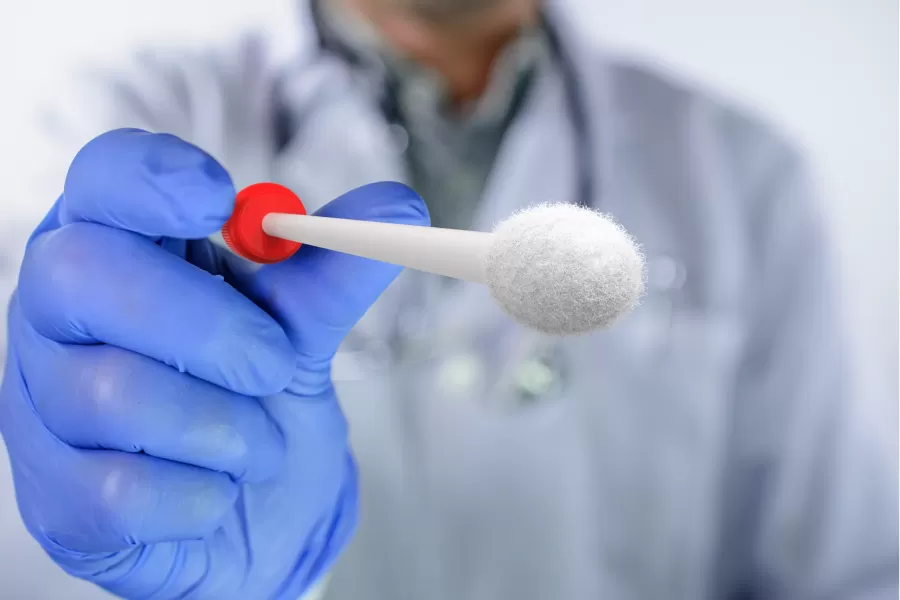
Nasal swabs may be the most widely used specimen collection tool in upper respiratory infection (URI) diagnostics, but familiarity doesn’t equate to safety.
From painful testing procedures to lab exposure risks, the swab comes with several downsides. And when these testing tools miss the mark amid heightened disease transmission, more than patient comfort is on the line. Global health outcomes are, too.
As healthcare leaders work to improve testing safety and efficiency, evolved nasal lavage has emerged as a smarter sampling standard. Explore the risks of swabs and why alternative methods are better equipped to support the well-being of patients, providers and lab professionals. Improved 21st-century sampling methods are critical during both standard URI conditions (especially cold-flu season) and potential future epidemics or pandemics.
Risk #1: Patient Harm Is More Common Than We Think
Specimen collection using the nasal swab for influenza, RSV, COVID-19 and other URIs can lead to rare, but extremely dangerous adverse events. According to 2022 data from the American Journal of Rhinology & Allergy, complications occurred in one in every 600 cases.
That figure may seem trivial, but translate that to the 363 million tests administered during the pandemic, and that’s more than half a million people with a nasal swab test gone wrong.
The specific causes among cases with adverse effects?
- Swab fracture resulting in retained foreign body (47%)
- Epistaxis (17%)
- Severe headache (11%)
Of the reported retained foreign bodies due to swab fracture, 12% required removal under general anesthesia and 4.5% required surgical intervention. The most serious complication was a cerebrospinal fluid (CSF) leak, which led to meningitis.
The riskier the test, the less likely people are to get one. Not to mention, people simply don’t like having a swab rammed up their nose — which is less clinically traumatic, but equally important for supporting strong testing volumes.
Risk #2: Patient Discomfort = Test Avoidance
Many patients, especially those with test anxiety, walked away from their nasal swab sampling experience with one lasting impression: “Never again.”
Swab-based specimen collection requires deep insertion into the nasal cavity (often 4 to 6 inches) to reach the nasopharynx. This process often triggers involuntary reactions like flinching, sneezing, gagging, coughing, eye-watering or nosebleeds, and these negative experiences may lead to test avoidance:
- In a survey of 2,000 U.S. adults at the pandemic’s peak, 34% said comfort was the single most important factor when choosing a collection method.
- And today? As of June 2025, JAMA reports nearly a third of Americans would not, or might not, test for suspected COVID-19 with the nasal swab.
Test avoidance may delay oral antiviral intervention during the critical treatment window and could result in missed opportunities to limit transmission.
Risk #3: Laboratory Hazards Strain Workflows
What happens after the sample leaves the patient in the clinic is just as important as how it’s collected in the lab. And with nasal swabs, manual extraction invites manual error.
Removing swabs from transport tubes by hand can increase opportunities for disease exposure from infectious material. Plus, just one broken-off swab or clogged pipette tip can significantly slow workflows and increase costs by up to $20,000 per year.
At scale, these risks take a toll, from higher contamination risk and more processing mishaps to potential delays in treatment that may affect outcomes.
Risk #4: Public Health Suffers
When specimen collection falls short, so does our ability to stop the spread. Several drawbacks of the nasal swab contribute to this.
- Inconsistent samples: Nasal swab techniques vary greatly depending on the user, especially with self-administered tests. In turn, PCR machines can’t capture adequate nucleic acids (DNA or RNA) from the specimen to provide a conclusive diagnosis.
- Low sensitivity: Typically, nasal swabs are paired with rapid antigen tests. But these antigen tests have an average sensitivity of just 8% in asymptomatic individuals and 64.2% in symptomatic individuals, according to Centers for Disease Control (CDC) data. (Hint: The closer to 100%, the better the sensitivity.)
- False negatives: The CDC also reports false negative rates of nasal swabs coupled with antigen tests, particularly within the first 3-5 days of symptom onset, average 30% to 50%.
These missed diagnoses due to nasal swabs and rapid testing are a missed opportunity to isolate, treat and protect others — ultimately undermining outbreak containment and putting vulnerable populations at risk.
A Safer Specimen Collection Alternative: Evolved Nasal Lavage
Although nasal swabs were the pandemic sampling standard, this doesn’t mean we can’t raise the bar. Evolved nasal lavage eliminates deep insertion, scraping and injuries to the nasal mucosa and the risk of broken-off swabs.
Rather than relying on physical contact with delicate nasal tissue, a sterile saline rinse gently collects a broad range of epithelial cells and viral particles.
It’s better tolerated by patients, easier for providers to administer and produces a more sensitive sample. The result? Greater public acceptance, more consistency and less risk, from collection to diagnosis.
Stop Settling for Swabs: Meet MicroWash
MicroWash, a patented nasal lavage specimen collection device, replaces nasal swabs to deliver a pleasant experience for patients and a better specimen for high-sensitivity PCR laboratory testing.
It’s not just welcome news to anyone who’s had a bad experience with swabs ― the device also delivers:
- Up to 49% greater sensitivity compared to nasal swabs for fewer false negatives
- Average patient pain ratings of just 0.3/10, compared to nasal swabs at 8/10
- A 3-year shelf life, compared to the nasal swab’s 1 to 2 years
- Quick and easy integration with existing lab processes
- Greater multi-virus pathogen detection range
- An identified CPT code for reimbursement
Discover more advantages of MicroWash over nasal swabs and contact our medical experts today to equip your healthcare organization with the present and future of URI diagnostics.