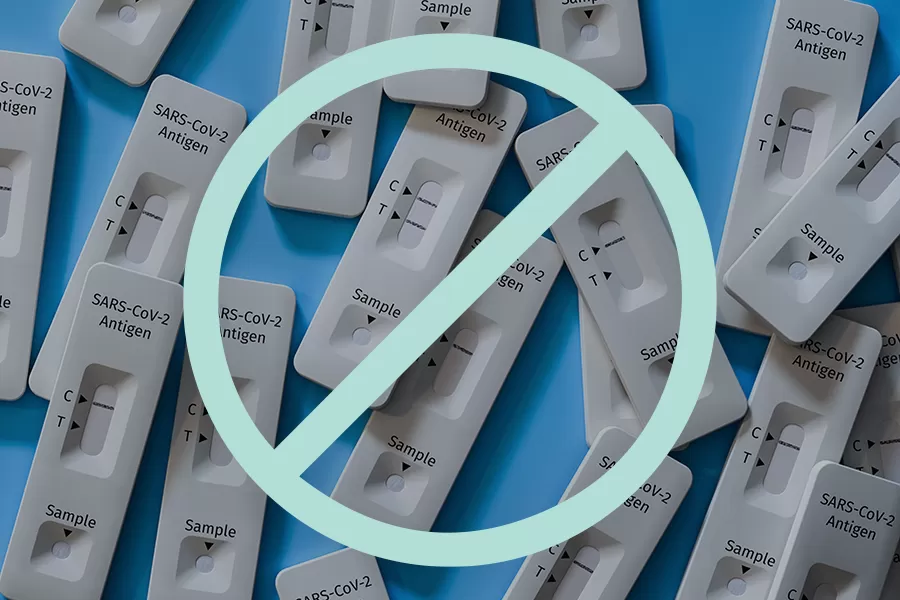
Antigen tests coupled with nasal swabs carried us through the pandemic, but this inconsistent and less sensitive “quick fix” is no longer the gold standard in upper respiratory infection (URI) diagnostics — especially for high-risk populations over age 65, under age 5 and any individual with a chronic disease.
With more sensitive, comfortable and scalable solutions now available, it’s time to rethink our testing strategy. Evolved nasal lavage paired with polymerase chain reaction (PCR) testing offers the reliability needed for faster, more precise care without compromising accessibility.
Adoption of a cutting-edge sample collection system equates to better preparation for future outbreaks in addition to state-of-the-art URI evaluation today. So, let’s dive into the key differences of PCR versus antigen testing and what they mean for your healthcare system.
Antigen Tests as the COVID-19 Standard
During the COVID-19 pandemic, antigen tests were widely adopted because they were inexpensive and easy to use at home. In the midst of a public health emergency, speed and scalability also mattered.
But this tradeoff fell short when considering the following:
- Higher false negative rate
- Lower sensitivity rate
- Single-pathogen detection for the vast majority of antigen testing kits
- Inconsistent sample collection
These antigen test shortcomings frequently led to inaccurate diagnoses, missed therapeutic windows and delayed treatment, which was shown to increase the likelihood of complications, hospitalizations and death.
The bar for accurate diagnostics has now been raised, and pairing high-sensitivity PCR tests with evolved nasal lavage is the clear next step. But before exploring why this reimagined collection method works, it’s important to understand the shortcomings of nasal swab antigen tests.
The Downsides of Antigen Tests
Lower Sensitivity Decreases Reliability
Antigen tests have an average sensitivity of 35.8% in asymptomatic individuals and 64.2% in symptomatic individuals, according to CDC data. As a result, they miss up to half of positive cases, particularly early in the infection, the critical time period for therapeutic intervention.
As for PCR tests, sensitivity skyrockets to up to 49% greater than antigen tests. In a laboratory setting, the College of American Pathologists revealed many COVID-19 diagnostic PCR tests can approach 100% sensitivity.
This wide gap in sensitivity helps explain why false negatives are so common with antigen tests.
Higher False Negative Test Rates Deter Timely Diagnoses
While antigen tests producing false positives is rare, the CDC reports false negatives (particularly within the first 3 to 5 days of symptom onset) average a staggering 30% to 50%.
That’s a big problem, because specific antivirals or therapies are most effective during that early treatment window.
A delayed or missed diagnosis can lead to avoidable complications, particularly for high-risk groups. A study published in the journal, Clinical Infectious Diseases, found that patients who began antiviral treatment for influenza two to five days after hospital admission were 40% more likely to die within 30 days compared to those who started treatment on the day of admission.
In addition, academic medical center studies have shown that the benefit from specific COVID-19 therapy (Paxlovid) lost almost all of its therapeutic benefit if initiated beyond five days after symptom onset.
Time is of the utmost importance when identifying URI pathogens and beginning their corresponding treatments — and antigen tests have proven unreliable when it matters most.
Single-Pathogen Detection Limits Capacity for Disease Control
Most antigen tests only screen for one pathogen — usually SARS-CoV-2 or influenza. But it’s not uncommon for URIs to present with overlapping symptoms across multiple viruses, including RSV.
When providers can’t determine which specific virus is causing the illness, they’re forced to make broad or conservative treatment choices. This ambiguity can lead to:
- Missed opportunities to prescribe antivirals that only work for certain pathogens (e.g., Paxlovid for COVID-19 or Tamiflu for the flu)
- Treatment complications or drug side effects from unneeded antivirals/antibiotics which also includes the development of drug-resistant pathogen strains
- Greater likelihood of illness complications or hospitalization due to delayed intervention
Amid high-risk populations, this lack of clarity can be the difference between a manageable case and a medical emergency.
PCR tests, when paired with higher-sensitivity sampling methods, can detect 12+ pathogens from a single sample — allowing clinicians to act fast, treat appropriately and improve health outcomes.
Inconsistent Sample Collection Creates Inaccuracies
Since most antigen tests rely on self-swabbing, the quality of the sample can vary widely. Poor collection technique due to discomfort, hesitancy and user error reduces accuracy even further. These problems, albeit to a lesser degree, can also be seen by professionally performed nasal swab collections.
In contrast, professionally administered sample collection devices like MicroWash standardize and simplify the process while making it virtually pain-free, improving sample quality and diagnostic reliability.
The Clear Sampling Choice: MicroWash + PCR Testing
When weighing your options for PCR versus antigen testing, PCR is ideal for more accurate diagnoses and more effective treatment. But to maximize its potential — and make it practical for widespread use — you’ll need a sampling device that utilizes 21st-century technology.
That’s where MicroWash comes in. When coupled with PCR testing, this revolutionary nasal lavage specimen collection device yields up to 49% greater sensitivity than the swab/antigen. PCR testing on the MicroWash sample detects up to a dozen pathogens at once — sooner — to ensure a trustworthy and timely diagnosis that informs a comprehensive, appropriate treatment plan.
What’s more, the general public and providers both prefer it. Patient pain ratings average just 0.3/10, compared to nasal swabs at 8/10.
Ready to leave behind antiquated, lower sensitivity antigen methods and equip your healthcare system with this game-changing solution? Discover the advantage and contact our medical experts today.